
Home » Support » Vibration Training

Lostbetsgames.14.07.25.earth.and.fire.with.bell...

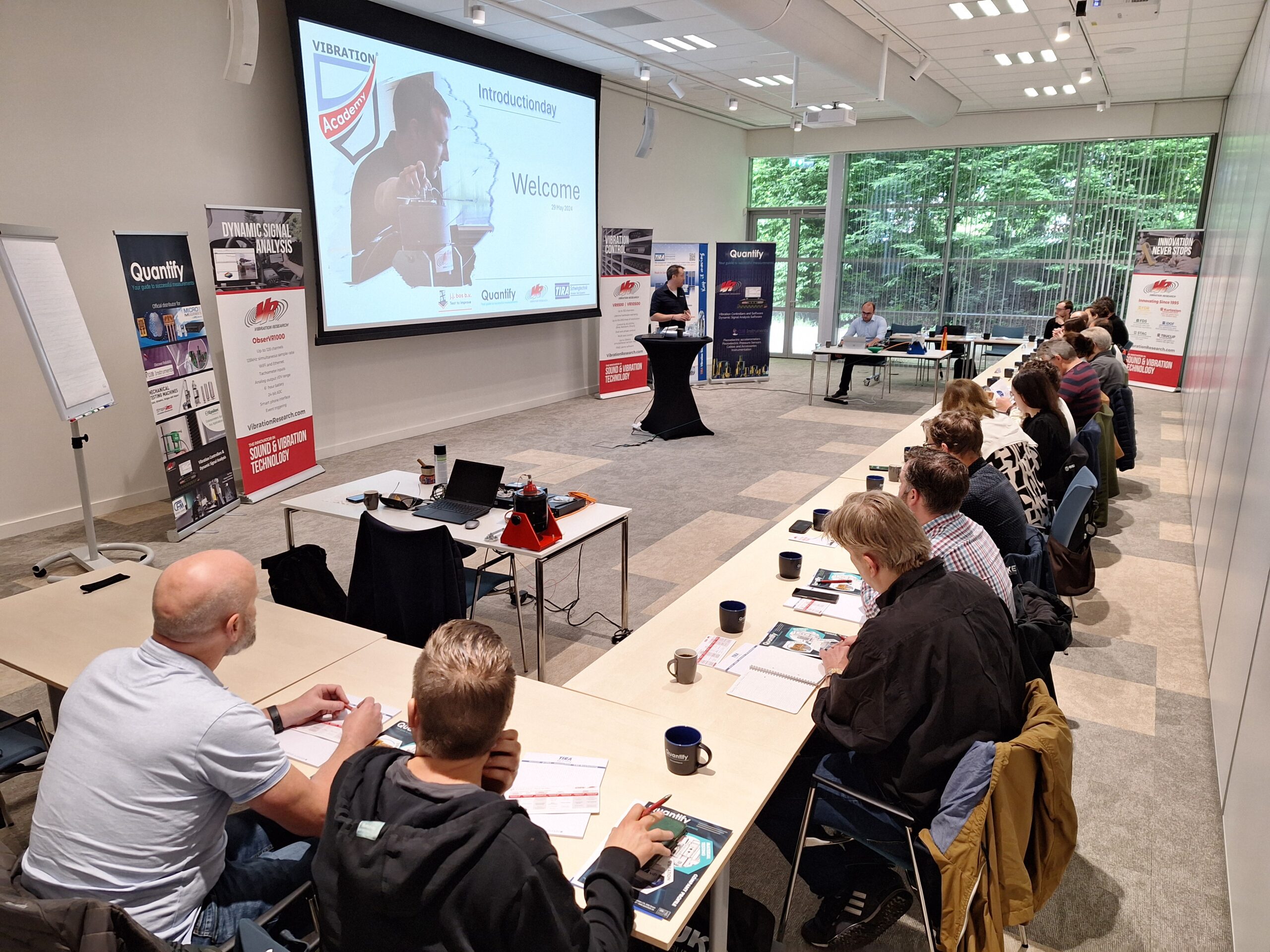
Do you perform vibration tests on a electrodynamic shakers? Do you ever feel you are just trying to setup tests following ISO or MIL standards but want to know what the deeper meaning is and how you can define your tests more accurate and how to make them represent more the real time environment of your product? Then you came to the right place to learn all about vibration tests and how to optimize them.


The Vibration Academy has been developed in partnership with the VRU (Vibration Research University).

Training for vibration testing

Lostbetsgames.14.07.25.earth.and.fire.with.bell...

There are consequences that ripple beyond the individual. In towns where LostBetsGames took root, quiet shifts occur: streets that once claimed certain names now hold different echoes. Families recompose; friendships lose and gain false starts. The game acts like a tectonic nudge. Earth wagers pull things inward, creating pockets of memory that resist decay—strongholds of heritage, superstition, stubborn loyalties. Fire wagers erase and recomposite, often freeing people from burdensome pasts but sometimes severing anchors they did not know they needed.

They called it a relic before anyone agreed on its name: a string of characters half-archival, half-ritual. LostBetsGames.14.07.25.Earth.And.Fire.With.Bell... — a filename that sounded like the last thing someone would save before walking out of a house they never planned to return to. It opened like a dare: decode me, play me, or leave me sealed in your desktop’s shadows.

LostBetsGames also has an archival impulse. Someone keeps a ledger—call it a list, call it an artifact—of outcomes. The ledger is partial, full of cross-outs and marginal notes; it is, in itself, another bet on what should matter. Historians of the game argue over whether the ledger is canon or contamination. Newcomers consult it for strategy, veterans distrust it for the same reason. This tension—between the desire to quantify and the refusal of reduction—sparks endless debate: is memory a resource to be optimized or a wild thing that cannot be tamed?

In the end, the game is less about winning than about revelation. The bell does not declare a victor so much as it announces consequence. Every toll is a lesson: your past is not inert; it is material that, once manipulated, alters the shape of your life. Whether you choose earth or fire, you change the landscape. The game asks us to consider whether the act of choosing is itself a means of becoming. LostBetsGames.14.07.25.Earth.And.Fire.With.Bell...

The people who gather around this relic bring with them backstories that make the game omnivorous. A woman who once promised never to speak of a child returns to bury the memory in Earth only to find the child’s name etched on a stone she thought she’d forgotten. A man burns his wedding vows as Fire and feels relief until the bell tolls and his hands remember how to build the curtains they once shared. Children treat it like schoolyard alchemy: will you lose your fear or gain someone else’s? The community becomes both audience and judge; gossip is the scoreboard.

Imagine an arena built from memory and weather. The players are easy to sketch: gamblers who wager with memory instead of money; archivists who bet on the survival of stories; children who trade dares beneath the rising moon. But this is no ordinary game. The date—14.07.25—folds the past into the present, a calendar hiccup where personal histories collide with geological ones. “Earth” and “Fire” are not mere elements here but wagers, stakes both literal and metaphoric. And “With Bell...” implies a tolling, an interruption: an announcement that something fixed is about to move.

Which brings us back to the fragmentary name: LostBetsGames.14.07.25.Earth.And.Fire.With.Bell... The ellipsis matters. It promises continuation, a tail of events yet to be recorded. The date anchors it in a single moment, but the rest is invitation. By naming Earth and Fire, it promises dual paths; by adding Bell, it adds a third: interruption, witness, ordinance. Together they make a constellation that is as much about community formation as it is about the interior life. There are consequences that ripple beyond the individual

That ambiguity is precisely what keeps the reader — or the player — leaning forward. LostBetsGames resists a single moral reading. It asks instead an iterative question: what are you willing to lose to change what you are? The answers vary. Freedom, guilt, memory, love—each has a market price in the game’s quiet ledger. And because of the bell, every bargain is dramatic: no one gets to take back a choice without paying a different kind of cost.

Seen as performance, it becomes theater. Townspeople line the edges, passing shared drinks and stories while players perform their own private reckonings. The rituals are small—circles drawn in ash, a bell rope pulled three times—but they lend the event a gravity that transcends superstition. The communal attention reframes loss as spectacle, and spectacle as belonging. Some come simply to watch others gamble with themselves. Others come to be witnessed; the bell, after all, sounds louder when more ears hear it.

The rules, if such a thing can be called rules, come to you like weather reports. Each round begins with a throw: a small handful of soil, a coin of ember, a recorded sound of a bell struck from a ruined tower. Players make promises—some to forget, some to remember—then place those promises into the earth or the fire. Earth keeps; fire consumes. Choosing earth is to invest in persistence, to bury a memory and trust that time will keep it safe. Choosing fire is to risk everything on transformation: offer the memory to flame and see what surfaces from its ash. The bell marks the moment between choice and consequence, a crooked punctuation that means the bet is sealed. The game acts like a tectonic nudge

If you were to stumble on this game—find the file, or the shed, or the bell—you’d be tempted to make a wager. The temptation is the engine of the story: we are all making bets with our memory and with our futures without knowing the costs. LostBetsGames simply makes those bets explicit and theatrical. It dramatizes the bargain every person strikes with time: bury this, burn that, remember some things just because you must. It rewards those who understand what they can live without and punishes those who mistake erasure for healing.

Not all bets resolve cleanly. Some rounds end in paradox: a memory returned that never belonged to the person who wagered, or an object burned that refuses to ash. Those anomalies fuel myth. People begin to see intent in the machine—patterns in the way Earth preserves or Fire transforms—until the game has its own personality: capricious, mischievous, severe. Some claim it tests moral commitment; others say it reveals truth by rearrangement. Some, more cynically, insist it’s a social mechanism for offloading responsibility: you can cast your past into heat or hole and claim absolution when it’s gone.

And that is why the filename lingers—enigmatic, suggestive: it is less a program than a promise that memories are portable, that risk can be ritual, that a bell can redraw the map of belonging. If you listen closely, somewhere beneath the mundane hum of town life, you might still hear it—one long, patient toll—asking: what will you place on the line next?

And then there is the bell. The bell’s toll is ambivalent. For some it is a clarifying sound, the moment you finally know what you owe; for others it is a knell that announces the beginning of loss. Sometimes the bell is real—an old iron bell hung in a shed at the game’s edge. Sometimes it’s a recording on a cracked phone. Sometimes it is a silence, the lack of sound that presses like a thumb on your throat. Yet every bell changes tempo according to who listens: the same note steadies one heart and sets another free to fall.

The stakes are not always what they seem. A loss might mean forgetting a name, misplacing a single truth. A win can return what was buried: a photograph, a hurt, a secret, or its echo. But the game’s genius is literalized cunning: you never merely wager objects; you wager identity. People approach it as one approaches a mirror under altered light. You may think you are trading possessions, but the game rearranges the geometry of the self. Those who win find things returned with small, uncanny differences: the eyes in the photograph blink slightly off rhythm; a letter comes back in a handwriting you half-remember but not the whole; the recalled secret arrives with a new reason attached.
Program

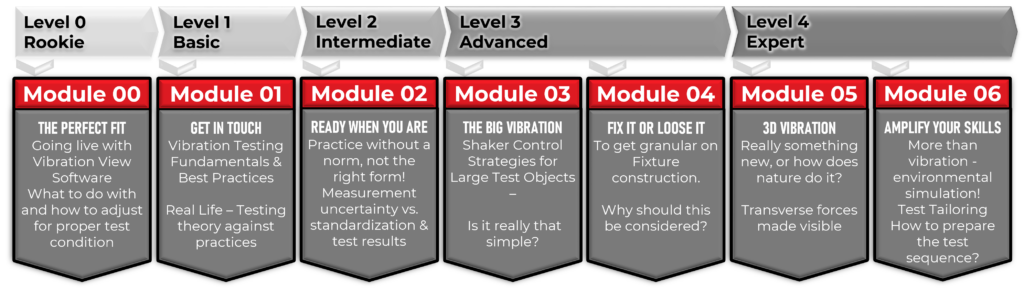
Welcome to our comprehensive training program on vibration testing, developed in collaboration with Vibration Research. Whether you are performing vibration tests on an electrodynamic shaker or striving to align your testing processes with ISO or MIL standards, our program offers a deep understanding of the underlying principles.

Gain insights into defining tests more accurately to mirror real-time environmental conditions for your products.

Designed for individuals ranging from beginners to aspiring experts in vibration testing, our training program is divided into four blocks, progressing from foundational knowledge to expert proficiency. Elevate your capabilities as a vibration engineer and enhance your effectiveness in the field.

For vibration engineers operating in accredited laboratories, our program ensures that you receive the necessary training to demonstrate compliance with accreditation standards.

Our modules are meticulously crafted to align with the requirements of each relevant certificate and accreditation level.

Program Overview

Vibration Class Program

Agenda

Vibration academy

📅 Module 01 - Beginner: May 6, 7 and 8 2025

🔹 Learn what is to know about a shaker and all its components
🔹 Learn why a shaker wobbles and how to control it
🔹 Understand system components and their interactions
🔹 Discover the physics behind vibration testing
🔹 Explore frequency response, shock strain, and measurement uncertainty

Where: Sebert Trillingstechniek B.V. – Weg en land 18, 2661 DB Bergschenhoek – Nederland

Trainers: Peter Sikor (Vibration Research) – Lukas Wagner (Tira)

Module 02 - vibration academy

📅 Module 02 - Intermediate: October 14, 15 and 16 2025

🔹 Understand the objectives of vibration testing
🔹 Learn how to recognize and prevent common mistakes
🔹 Gain insights into measurement uncertainty and conformity statements
🔹 Analyze errors in test systems and their root causes

Where: Sebert Trillingstechniek B.V. – Weg en land 18, 2661 DB Bergschenhoek – Nederland

Trainers: Peter Sikor (Vibration Research) – Lukas Wagner (Tira)

Key Highlights of Our Training Program:

1. **Skill Evaluation:** Each course begins with a thorough skill evaluation to determine your qualifications and guide you to the appropriate module. If you find that you do not yet meet the criteria, rest assured; you have the option to continue or start at a lower level, providing flexibility in tailoring your training to your specific needs.

2. **ISO17025 Compliance:** Our training modules are meticulously mapped to the requirements of ISO17025, offering a seamless alignment with industry standards. This ensures that you are well-prepared for audits.

3. **Certificate Management:** To simplify the certification tracking process, Vibration Research has integrated a feature into their app. This tool allows you to effortlessly monitor and manage your certificates for each completed module, streamlining the audit preparation process.

Choose our training program to gain a comprehensive understanding of vibration testing, from fundamental concepts to advanced methodologies, and elevate your proficiency as a
vibration engineer.


Vibration Academy training seminarsOn site training


There are consequences that ripple beyond the individual. In towns where LostBetsGames took root, quiet shifts occur: streets that once claimed certain names now hold different echoes. Families recompose; friendships lose and gain false starts. The game acts like a tectonic nudge. Earth wagers pull things inward, creating pockets of memory that resist decay—strongholds of heritage, superstition, stubborn loyalties. Fire wagers erase and recomposite, often freeing people from burdensome pasts but sometimes severing anchors they did not know they needed.

They called it a relic before anyone agreed on its name: a string of characters half-archival, half-ritual. LostBetsGames.14.07.25.Earth.And.Fire.With.Bell... — a filename that sounded like the last thing someone would save before walking out of a house they never planned to return to. It opened like a dare: decode me, play me, or leave me sealed in your desktop’s shadows.

LostBetsGames also has an archival impulse. Someone keeps a ledger—call it a list, call it an artifact—of outcomes. The ledger is partial, full of cross-outs and marginal notes; it is, in itself, another bet on what should matter. Historians of the game argue over whether the ledger is canon or contamination. Newcomers consult it for strategy, veterans distrust it for the same reason. This tension—between the desire to quantify and the refusal of reduction—sparks endless debate: is memory a resource to be optimized or a wild thing that cannot be tamed?

In the end, the game is less about winning than about revelation. The bell does not declare a victor so much as it announces consequence. Every toll is a lesson: your past is not inert; it is material that, once manipulated, alters the shape of your life. Whether you choose earth or fire, you change the landscape. The game asks us to consider whether the act of choosing is itself a means of becoming.

The people who gather around this relic bring with them backstories that make the game omnivorous. A woman who once promised never to speak of a child returns to bury the memory in Earth only to find the child’s name etched on a stone she thought she’d forgotten. A man burns his wedding vows as Fire and feels relief until the bell tolls and his hands remember how to build the curtains they once shared. Children treat it like schoolyard alchemy: will you lose your fear or gain someone else’s? The community becomes both audience and judge; gossip is the scoreboard.

Imagine an arena built from memory and weather. The players are easy to sketch: gamblers who wager with memory instead of money; archivists who bet on the survival of stories; children who trade dares beneath the rising moon. But this is no ordinary game. The date—14.07.25—folds the past into the present, a calendar hiccup where personal histories collide with geological ones. “Earth” and “Fire” are not mere elements here but wagers, stakes both literal and metaphoric. And “With Bell...” implies a tolling, an interruption: an announcement that something fixed is about to move.

Which brings us back to the fragmentary name: LostBetsGames.14.07.25.Earth.And.Fire.With.Bell... The ellipsis matters. It promises continuation, a tail of events yet to be recorded. The date anchors it in a single moment, but the rest is invitation. By naming Earth and Fire, it promises dual paths; by adding Bell, it adds a third: interruption, witness, ordinance. Together they make a constellation that is as much about community formation as it is about the interior life.

That ambiguity is precisely what keeps the reader — or the player — leaning forward. LostBetsGames resists a single moral reading. It asks instead an iterative question: what are you willing to lose to change what you are? The answers vary. Freedom, guilt, memory, love—each has a market price in the game’s quiet ledger. And because of the bell, every bargain is dramatic: no one gets to take back a choice without paying a different kind of cost.

Seen as performance, it becomes theater. Townspeople line the edges, passing shared drinks and stories while players perform their own private reckonings. The rituals are small—circles drawn in ash, a bell rope pulled three times—but they lend the event a gravity that transcends superstition. The communal attention reframes loss as spectacle, and spectacle as belonging. Some come simply to watch others gamble with themselves. Others come to be witnessed; the bell, after all, sounds louder when more ears hear it.

The rules, if such a thing can be called rules, come to you like weather reports. Each round begins with a throw: a small handful of soil, a coin of ember, a recorded sound of a bell struck from a ruined tower. Players make promises—some to forget, some to remember—then place those promises into the earth or the fire. Earth keeps; fire consumes. Choosing earth is to invest in persistence, to bury a memory and trust that time will keep it safe. Choosing fire is to risk everything on transformation: offer the memory to flame and see what surfaces from its ash. The bell marks the moment between choice and consequence, a crooked punctuation that means the bet is sealed.

If you were to stumble on this game—find the file, or the shed, or the bell—you’d be tempted to make a wager. The temptation is the engine of the story: we are all making bets with our memory and with our futures without knowing the costs. LostBetsGames simply makes those bets explicit and theatrical. It dramatizes the bargain every person strikes with time: bury this, burn that, remember some things just because you must. It rewards those who understand what they can live without and punishes those who mistake erasure for healing.

Not all bets resolve cleanly. Some rounds end in paradox: a memory returned that never belonged to the person who wagered, or an object burned that refuses to ash. Those anomalies fuel myth. People begin to see intent in the machine—patterns in the way Earth preserves or Fire transforms—until the game has its own personality: capricious, mischievous, severe. Some claim it tests moral commitment; others say it reveals truth by rearrangement. Some, more cynically, insist it’s a social mechanism for offloading responsibility: you can cast your past into heat or hole and claim absolution when it’s gone.

And that is why the filename lingers—enigmatic, suggestive: it is less a program than a promise that memories are portable, that risk can be ritual, that a bell can redraw the map of belonging. If you listen closely, somewhere beneath the mundane hum of town life, you might still hear it—one long, patient toll—asking: what will you place on the line next?

And then there is the bell. The bell’s toll is ambivalent. For some it is a clarifying sound, the moment you finally know what you owe; for others it is a knell that announces the beginning of loss. Sometimes the bell is real—an old iron bell hung in a shed at the game’s edge. Sometimes it’s a recording on a cracked phone. Sometimes it is a silence, the lack of sound that presses like a thumb on your throat. Yet every bell changes tempo according to who listens: the same note steadies one heart and sets another free to fall.

The stakes are not always what they seem. A loss might mean forgetting a name, misplacing a single truth. A win can return what was buried: a photograph, a hurt, a secret, or its echo. But the game’s genius is literalized cunning: you never merely wager objects; you wager identity. People approach it as one approaches a mirror under altered light. You may think you are trading possessions, but the game rearranges the geometry of the self. Those who win find things returned with small, uncanny differences: the eyes in the photograph blink slightly off rhythm; a letter comes back in a handwriting you half-remember but not the whole; the recalled secret arrives with a new reason attached.